Table of Contents
The Ranked List
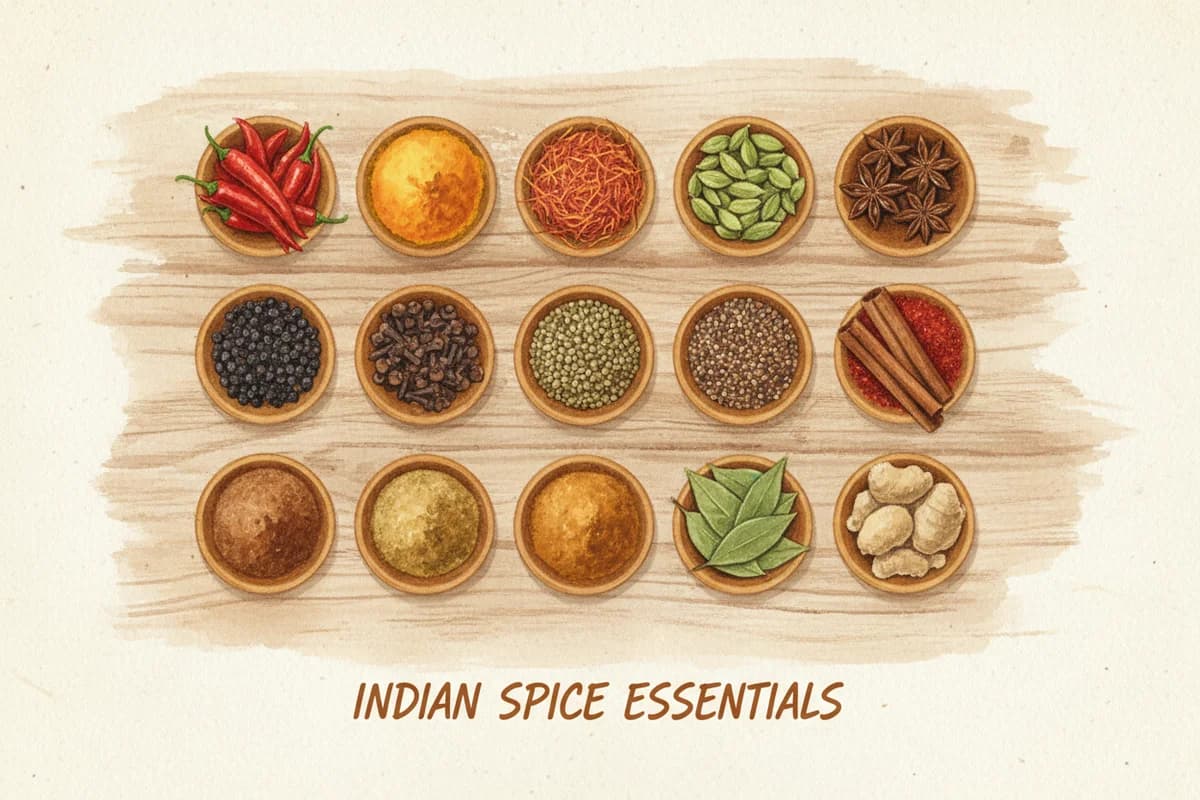
We ranked these by how many Indian dishes require them. Number 1 appears in more recipes than any other spice. Number 15 is wonderful but less universal. Buy them in this order as you build your Indian pantry.
1. Cumin Seeds (Jeera)
Why it is number one: Cumin is used in more Indian dishes than any other single spice. It is the first spice in most tadkas, the base note in most curry powders, and the flavor of jeera rice, jeera aloo, and dozens of other dishes. Flavor: Warm, earthy, slightly smoky with a hint of citrus. Buy: Whole seeds. Grind as needed. Whole cumin keeps for 2 to 3 years; ground cumin loses potency in months.2. Turmeric Powder (Haldi)
Why it ranks this high: Goes in virtually every Indian dish for color and subtle earthy flavor. Also provides curcumin, one of the most studied anti-inflammatory compounds. Flavor: Earthy, slightly bitter, warm. Used for color as much as flavor. Buy: Ground. Fresh turmeric root is nice but not essential. A small container lasts a long time since you use only 1/4 to 1/2 teaspoon per dish.3. Red Chili Powder (Lal Mirch)
Why: Heat is fundamental to most Indian dishes. Even "mild" Indian food typically has some chili. Flavor: Hot, with fruity or smoky undertones depending on variety. Buy: Start with Kashmiri chili powder (vibrant red color, moderate heat). Add cayenne or a hotter variety for more fire.4. Coriander Powder (Dhania)
Why: The quiet workhorse. Used in almost every curry base, often in larger quantities than other ground spices. Flavor: Warm, nutty, slightly citrusy. Subtle but essential for body and depth. Buy: Ground is fine for convenience. Or buy whole seeds and grind for noticeably fresher flavor.5. Garam Masala
Why: The finishing spice blend added at the end of cooking. One spoonful transforms a dish. Flavor: Warm, aromatic, complex. Cinnamon, cardamom, and clove dominate most blends. Buy: A commercial blend to start. Make your own once you are comfortable.6. Mustard Seeds (Rai)
Why: Essential for South Indian cooking and many North Indian pickles. The starting point of a South Indian tadka. Flavor: Sharp and pungent when raw. Nutty and mild when popped in oil. Buy: Black mustard seeds (smaller, more pungent) are standard in Indian cooking.7. Asafoetida (Hing)
Why: A tiny pinch adds an umami depth that nothing else provides. Essential in dal and many vegetarian dishes. Flavor: Overpowering raw (sulfurous, garlicky), but mellow and savory when cooked. A little goes a very long way. Buy: The compounded form (mixed with wheat flour) is most common and easiest to use. Store in an airtight container or everything in your pantry will smell like it.8. Black Pepper (Kali Mirch)
Why: Heat and flavor, plus piperine increases nutrient absorption by up to 2,000%. Used in garam masala, rasam, and as a finishing spice. Flavor: Sharp, biting heat that is different from chili. Woody, slightly floral. Buy: Whole peppercorns. Grind fresh. Pre-ground pepper loses its essential oils rapidly.9. Curry Leaves (Kadi Patta)
Why: The defining flavor of South Indian cooking. Used in tadka for sambar, rasam, and most South Indian dishes. Flavor: Citrusy, slightly nutty, unmistakable. Dried curry leaves are nearly flavorless; fresh is essential. Buy: Fresh from Indian grocery stores. Freeze extras in a ziplock bag; they retain flavor well when frozen.10. Green Cardamom (Elaichi)
Why: The most aromatic spice in Indian cooking. Essential in biryani, chai, desserts, and garam masala. Flavor: Intensely floral, eucalyptus-like, sweet, and cooling. Buy: Whole pods. Crack open and use the seeds for grinding. The pods can be used whole in rice dishes and chai.11. Cinnamon (Dalchini)
Why: Used in garam masala, biryani, pulao, chai, and many curries. Provides a sweet warmth. Flavor: Sweet, warm, slightly woody. True cinnamon (Ceylon) is milder; cassia bark is more common in Indian cooking. Buy: Sticks/bark for whole use. Ground for blending. Indian cooking typically uses cassia, which is labeled "cinnamon" in most stores.12. Cloves (Laung)
Why: A core garam masala ingredient. Used in biryani, meat curries, and chai. Flavor: Intensely warm, slightly numbing, aromatic. Buy: Whole. A small bag lasts a long time since you only use 3 to 5 per dish.13. Fenugreek (Methi)
Why: Three forms serve different purposes. Dried leaves (kasuri methi) finish butter chicken and dal makhani. Seeds go in tadka and pickles. Fresh leaves make sabzi and paratha. Flavor: Seeds are bitter and maple-like. Dried leaves are aromatic and savory. Research suggests blood sugar benefits. Buy: Dried leaves (kasuri methi) first. Seeds second. Fresh when available.14. Bay Leaves (Tej Patta)
Why: Added to rice dishes, biryani, and some curries for a subtle background aroma. Flavor: Subtle, slightly floral, herbal. You do not taste bay leaves directly, but you notice when they are missing. Buy: Dried. Indian bay leaves (tej patta) are different from Mediterranean bay leaves but both work.15. Fennel Seeds (Saunf)
Why: Used in some spice blends, Bengali panch phoran, and Kashmiri cooking. Also chewed after meals as a digestive. Flavor: Sweet, anise-like, slightly cooling. Buy: Whole seeds. A small bag lasts a long time.Quick Reference: Buy Order
First trip: Cumin, turmeric, chili powder, coriander powder, garam masala Second trip: Mustard seeds, asafoetida, black pepper, curry leaves, cardamom Third trip: Cinnamon, cloves, fenugreek (kasuri methi), bay leaves, fennelStorage Reminder
All whole spices: airtight containers, away from heat and light. 2 to 3 years shelf life. All ground spices: same storage, but replace every 6 to 12 months.
Explore each spice in detail on our spice guide, and learn the technique that brings them all together in our guide to tempering spices.