Fenugreek: Blood Sugar, Testosterone, and Breast Milk
Medical Disclaimer
This content is for educational purposes only. It is not medical advice, diagnosis, or treatment. Consult your doctor or registered dietitian before making dietary changes, especially if you have a medical condition or are taking medication.
In This Article
The Spice That Does Three Different Jobs
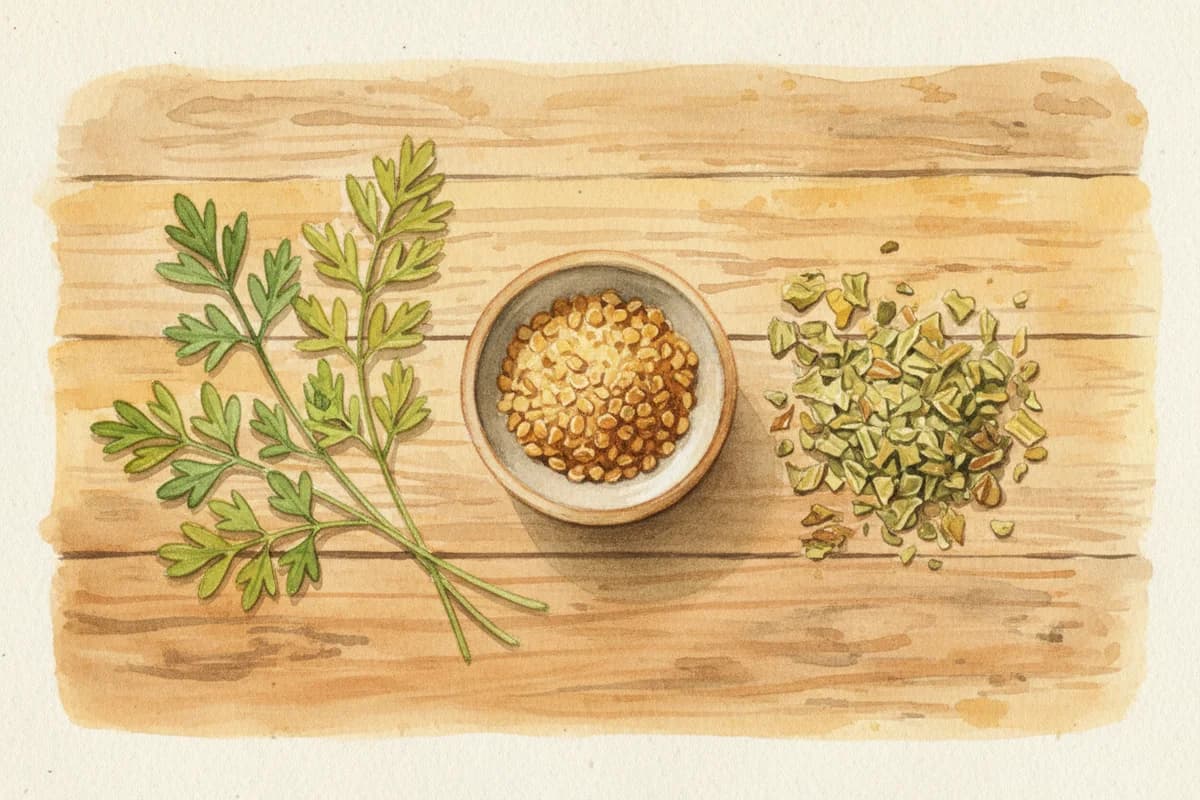
Fenugreek, known as methi in Hindi, is one of the most pharmacologically interesting spices in the Indian kitchen. While most spices are studied for one or two bioactive properties, fenugreek has credible research across three distinct health domains: blood sugar regulation, hormonal effects, and lactation support.
That is unusual. Most traditional remedies that claim to do multiple things turn out to do none of them well. Fenugreek is an exception. The evidence is not perfect, and more research is needed, but what exists is genuinely promising.
What Makes Fenugreek Biochemically Unique
Fenugreek seeds contain several bioactive compounds that work through different mechanisms:
- 4-Hydroxyisoleucine: An unusual amino acid found almost exclusively in fenugreek. Research suggests it may stimulate insulin secretion in a glucose-dependent manner, meaning it may help lower blood sugar without causing dangerous hypoglycemia.
- Galactomannan: A soluble fiber that makes up about 50 percent of fenugreek seed weight. This gel-forming fiber slows gastric emptying and glucose absorption.
- Diosgenin: A steroidal sapogenin that serves as a precursor for the synthesis of various steroid hormones. This compound is the basis for fenugreek's hormonal effects.
- Trigonelline: An alkaloid with potential neuroprotective and blood-sugar-lowering properties.
Blood Sugar: The Strongest Evidence
What the Meta-Analysis Says
The most comprehensive review of fenugreek and blood sugar is a 2014 meta-analysis published in Nutrition Journal [1]. The researchers analyzed 10 clinical trials involving both type 1 and type 2 diabetic patients and found that fenugreek supplementation significantly reduced fasting blood glucose levels. The pooled effect was a reduction of approximately 17.9 mg/dL, which is clinically meaningful.
The studies used doses ranging from 1 to 100 grams of fenugreek seeds per day, with higher doses showing larger effects. The meta-analysis noted that the glucose-lowering effect was consistent across different study designs and populations.
The Indian Diabetes Study
A particularly relevant study for Indian readers was conducted by Gupta and colleagues in 2001 [4]. In this double-blind, placebo-controlled trial, type 2 diabetic patients received 1 gram of fenugreek seed extract daily for two months. The fenugreek group showed significant reductions in fasting blood glucose and improvements in insulin sensitivity compared to placebo.
The researchers also noted improvements in triglyceride levels and HDL cholesterol, suggesting broader metabolic benefits.
The Mechanism
Fenugreek appears to lower blood sugar through at least three parallel mechanisms:
- Fiber-mediated slowing of glucose absorption. The galactomannan fiber in fenugreek forms a viscous gel in the stomach that physically delays carbohydrate digestion and glucose uptake.
- Direct insulin stimulation. 4-Hydroxyisoleucine appears to enhance insulin secretion from pancreatic beta cells, but only when glucose levels are elevated. This glucose-dependent mechanism is important because it reduces the risk of hypoglycemia.
- Improved insulin sensitivity. Some studies suggest fenugreek may improve how cells respond to insulin, independent of its effects on insulin secretion.
Testosterone and Male Health: Promising but Early
The Resistance Training Study
A 2016 randomized controlled trial published in the Journal of Sport and Health Science studied the effects of fenugreek glycoside supplementation in male subjects undergoing resistance training [2]. The fenugreek group showed significant increases in free testosterone levels, decreases in body fat percentage, and improved strength compared to placebo over an 8-week period.
The Libido Study
An earlier 2011 study by Steels and colleagues found that a standardized fenugreek extract significantly improved self-reported scores for sexual arousal, energy, and stamina in healthy men over 6 weeks compared to placebo [5]. The researchers noted increases in both free and total testosterone.
Important Caveats
The testosterone research on fenugreek is promising but has significant limitations:
- Study sizes are small (typically 30 to 60 participants).
- Most studies use standardized extracts at much higher concentrations than you would get from dietary fenugreek.
- The magnitude of testosterone increase is modest, typically 10 to 20 percent, not the dramatic effects some supplement companies advertise.
- Long-term safety data is limited.
- Some of the testosterone studies are funded by supplement manufacturers, which introduces potential bias.
Lactation Support: Traditional Wisdom with Some Data
The Galactagogue Evidence
Fenugreek has been used as a galactagogue (a substance that promotes breast milk production) across cultures for centuries. Indian, Middle Eastern, and Mediterranean traditions all include fenugreek for new mothers.
A 2011 study published in the Journal of Alternative and Complementary Medicine found that mothers who consumed fenugreek tea produced significantly more breast milk compared to a control group [3]. The infants of fenugreek-consuming mothers also regained their birth weight faster.
The Mechanism (Probable)
The exact mechanism by which fenugreek may increase milk production is not fully understood. Hypotheses include:
- Phytoestrogen effects: Fenugreek contains compounds that may mimic estrogen, which plays a role in milk production.
- Stimulation of sweat glands: Mammary glands are modified sweat glands, and fenugreek is known to stimulate sweat production.
- Prolactin modulation: Some researchers suggest fenugreek may influence prolactin levels, though this has not been conclusively demonstrated.
Practical Considerations
The evidence here is rated moderate. The studies that exist are generally small and methodologically limited. However, given fenugreek's long history of safe use in postpartum contexts and the relatively low risk of side effects at culinary doses, many lactation consultants consider it a reasonable option for mothers who want to try a natural approach.
Important: Any breastfeeding mother should consult her healthcare provider before using fenugreek supplements. While culinary amounts (as used in methi paratha or methi dal) are generally considered safe, concentrated supplements may interact with medications or affect individuals with certain conditions.What Does Not Hold Up
"Fenugreek Is a Natural Alternative to Diabetes Medication"
No. Research suggests fenugreek may help manage blood sugar, and some studies show meaningful reductions in fasting glucose. But fenugreek has not been shown to be equivalent to metformin, insulin, or other established diabetes medications. It may be a useful adjunct, but it is not a replacement. Do not stop taking prescribed medications in favor of fenugreek.
"Fenugreek Will Dramatically Boost Testosterone"
The research shows modest effects on free testosterone in specific contexts (young men doing resistance training, for example). It will not turn you into a different person. Supplement marketing dramatically overstates the effects.
"More Is Better"
Fenugreek in excessive amounts can cause digestive discomfort, diarrhea, and a characteristic maple-syrup odor in sweat and urine. Some individuals report allergic reactions. As with most bioactive compounds, there is a dose-response curve, and more is not always better.
What This Means for Your Kitchen
Fenugreek is one of the few spices where the culinary and medicinal uses genuinely overlap. Here is how to incorporate it meaningfully:
- Use methi seeds in your tadka. A half teaspoon of fenugreek seeds, tempered in hot ghee or oil until they darken slightly, adds a subtle bitter-sweet flavor to dal and vegetable dishes. This is a practical way to get a small daily dose.
- Eat methi leaves (fresh or dried). Fresh methi greens in parathas, sabzis, or mixed into dough provide both the seeds' benefits and additional iron, vitamin C, and beta-carotene from the greens.
- Add kasuri methi (dried fenugreek leaves) to finish dishes. Crushed kasuri methi adds aroma to butter chicken, dal makhani, and paneer dishes. The amounts are small, but regular use adds up.
- For blood sugar support, consider soaked seeds. The traditional Indian remedy of soaking 1 to 2 teaspoons of fenugreek seeds overnight in water and consuming them in the morning has some research support for blood sugar management. Discuss this with your doctor, especially if you take diabetes medication.
- For lactation, consult your healthcare provider. If you are breastfeeding and considering fenugreek, discuss appropriate forms and doses with a lactation consultant or doctor.
The Bottom Line
Fenugreek is one of the most pharmacologically active spices in the Indian kitchen, and the research, while not perfect, is genuinely interesting. The evidence for blood sugar management is the strongest, with multiple clinical trials showing meaningful effects. The evidence for hormonal effects and lactation support is promising but needs more rigorous study.
What makes fenugreek remarkable is that these are not overlapping claims from the same mechanism. The blood sugar effects come primarily from fiber and 4-hydroxyisoleucine. The hormonal effects come from diosgenin and related saponins. The lactation effects may involve yet another pathway. It is a spice that genuinely does different things through different compounds.
Use it in your cooking regularly. Discuss concentrated supplementation with your doctor. And appreciate that the methi your grandmother added to her dal was doing more than just adding flavor.
Sources and References
- [1] Neelakantan N, Narayanan M, de Souza RJ, van Dam RM. “Effect of fenugreek (Trigonella foenum-graecum L.) intake on glycemia: a meta-analysis of clinical trials.” Nutrition Journal, 2014. View source
- [2] Wankhede S, Mohan V, Thakurdesai P. “Beneficial effects of fenugreek glycoside supplementation in male subjects during resistance training: a randomized controlled pilot study.” Journal of Sport and Health Science, 2016. View source
- [3] Turkyilmaz C, Onal E, Hirfanoglu IM, Turan O, Koc E, Ergenekon E, Atalay Y. “The effect of galactagogue herbal tea on breast milk production and short-term catch-up of birth weight in the first week of life.” Journal of Alternative and Complementary Medicine, 2011. View source
- [4] Gupta A, Gupta R, Lal B. “Effect of Trigonella foenum-graecum (fenugreek) seeds on glycaemic control and insulin resistance in type 2 diabetes mellitus: a double blind placebo controlled study.” Journal of the Association of Physicians of India, 2001. View source
- [5] Steels E, Rao A, Vitetta L. “Physiological aspects of male libido enhanced by standardized Trigonella foenum-graecum extract and mineral formulation.” Phytotherapy Research, 2011. View source
Medical Disclaimer
This content is for educational purposes only. It is not medical advice, diagnosis, or treatment. Consult your doctor or registered dietitian before making dietary changes, especially if you have a medical condition or are taking medication.
Related Recipes
More on Nutrition

Get Weekly Nutrition Insights
Evidence-based articles on Indian food and health, delivered to your inbox. No spam, no fads, just science.