What Is Tadka?
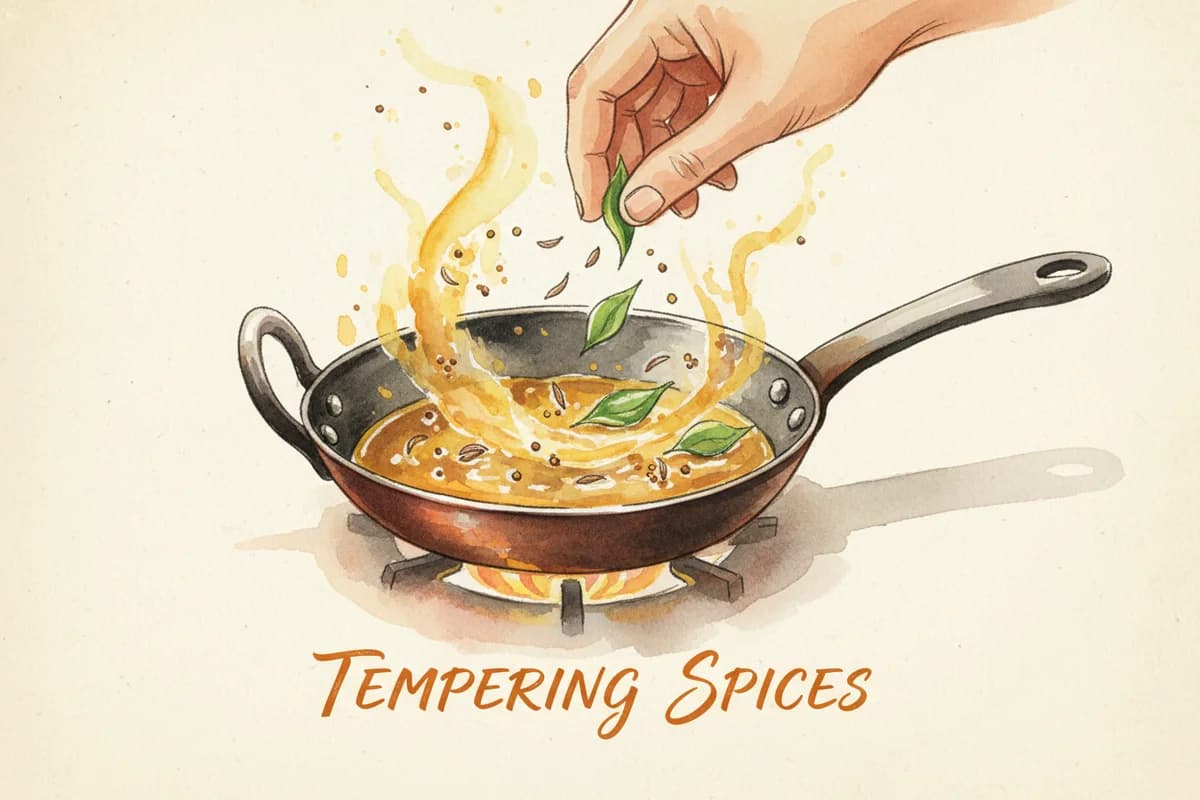
Tadka (also called tempering, chaunk, phodni, tarka, or baghaar depending on the region) is the technique of heating whole spices in hot fat to release their essential oils, then adding this flavored fat to a dish. It takes 30 to 60 seconds and transforms bland food into Indian food.
This is not optional. It is not decoration. Tadka is the foundational technique that gives Indian cooking its distinctive flavor. Without it, dal is just boiled lentils. With it, dal becomes a complete dish.
The Science
Most spice flavor compounds are fat-soluble, not water-soluble. When you add cumin seeds to water, not much happens. When you add cumin seeds to hot oil or ghee, the fat extracts volatile oils (cuminaldehyde, in this case) and distributes them throughout the dish.
The heat also triggers chemical reactions. Mustard seeds pop as their cells rupture, releasing sharp, pungent isothiocyanates. Cumin seeds darken as Maillard reactions create new flavor compounds. Curry leaves sizzle as their moisture escapes and their citrusy oils release into the fat.
The fat acts as both a solvent (extracting flavors) and a vehicle (carrying them into every bite of food). Black pepper's piperine, turmeric's curcumin, all of these beneficial compounds are also fat-soluble, meaning the tadka is also a nutrient delivery system.
Equipment
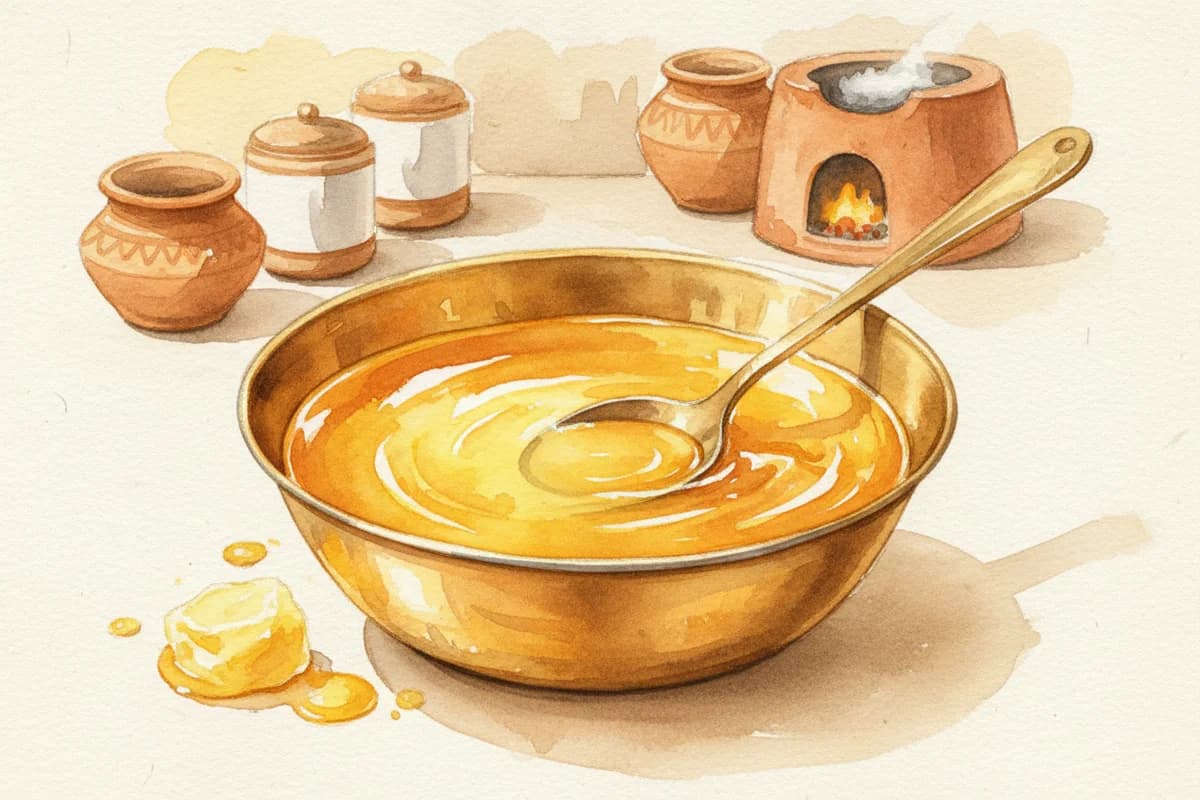
A small tempering pan (tadka pan). A tiny pan with a long handle, specifically designed for this purpose. Steel or cast iron. Inexpensive and found in every Indian kitchen. Alternatively: Any small saucepan or the pot you are cooking the dish in. Fat: Ghee (preferred for flavor), mustard oil (Bengali and some North Indian cooking), coconut oil (South Indian), or any neutral cooking oil.The Basic Method
Step 1: Heat the Fat
Add 1 to 2 teaspoons of ghee or oil to the tadka pan. Heat over medium to medium-high heat. The fat should be hot but not smoking.
How to test: Drop a single cumin seed into the oil. If it sizzles immediately and starts to change color within 2 to 3 seconds, the oil is ready. If it sits there silently, the oil is not hot enough.Step 2: Add Whole Spices
Add your whole spices to the hot fat. The order matters for multi-spice temperings: add the spices that take longest to cook first.
Typical order:- Mustard seeds (they need to pop)
- Cumin seeds
- Dried whole red chilies
- Curry leaves
- Asafoetida (hing, just a pinch, added last as it burns quickly)
Step 3: Watch and Listen
This is the critical window. You have 15 to 45 seconds from when the spices hit the oil.
Mustard seeds: They will sputter and pop. Cover partially with a lid to prevent flying seeds. When the popping slows, they are done. Cumin seeds: They will sizzle and turn a shade darker (golden brown). This takes about 10 to 15 seconds. Curry leaves: They will crackle aggressively as moisture escapes. Stand back, as they can splatter. They are done when the crackling subsides. Dried red chilies: They will darken slightly and become fragrant. Do not let them turn black.Step 4: Add to the Dish (or Add the Dish to the Tempering)
Two approaches, depending on the recipe:
Tadka on top: Pour the hot, flavored fat over finished dal, rice, or yogurt. This is the traditional method for dal tadka. Tadka as base: Use the tempering as the starting point for building a curry. After the spices bloom, add onions, ginger, garlic, and continue cooking. This is how most sabzis and curries begin.The 10 Essential Tempering Combinations
1. North Indian Dal Tadka
Fat: Ghee Spices: Cumin seeds + 1 dried red chili + pinch of asafoetida (hing) Used for: Any dal, especially toor or moong2. South Indian Sambar/Rasam Tadka
Fat: Coconut oil or sesame oil Spices: Mustard seeds + urad dal (a few) + dried red chili + curry leaves + asafoetida Used for: Sambar, rasam, poriyal, kootu3. Bengali Panch Phoran Tadka
Fat: Mustard oil Spices: Equal parts cumin, fennel, fenugreek, nigella (kalonji), mustard seeds Used for: Bengali dal, vegetables, fish4. Gujarati Tadka
Fat: Oil Spices: Mustard seeds + cumin seeds + curry leaves + green chilies + pinch of sugar Used for: Gujarati dal, kadhi, vegetables5. Jeera Rice Tadka
Fat: Ghee Spices: Cumin seeds + bay leaf + 2 to 3 cloves + small piece of cinnamon Used for: Jeera rice, pulao base6. Raita / Dahi Tadka
Fat: Ghee Spices: Cumin seeds + small dried red chili Used for: Finishing boondi raita, dahi vada7. Chole / Rajma Tadka
Fat: Oil or ghee Spices: Cumin seeds + dried red chili + whole coriander seeds Used for: Finishing chole, rajma8. Aloo / Sabzi Tadka (Base)
Fat: Oil or ghee Spices: Cumin seeds + mustard seeds + curry leaves + green chili Used for: Starting any dry vegetable sabzi9. Fish Curry Tadka (Bengali)
Fat: Mustard oil Spices: Kalonji (nigella) + dried red chili + whole green chili Used for: Bengali fish curries10. Biryani Tadka (Layering Fat)
Fat: Ghee Spices: Whole cinnamon + cardamom pods + cloves + bay leaf + star anise Used for: Biryani base, before adding marinated meatCommon Mistakes
Oil not hot enough. The most common error. If spices do not sizzle immediately, your oil is too cool, and the spices will absorb oil instead of releasing their oils into it. Oil too hot / spices burnt. If your cumin seeds turn black instantly, the oil is too hot. Burnt spices taste acrid and bitter. Start over; there is no fixing burnt tempering. Adding too many spices at once. Different spices need different cooking times. Mustard seeds need more time than cumin, which needs more time than curry leaves. Add in sequence. Using ground spices in tadka. Ground spices burn almost instantly in hot fat. They should be added later, to a wet base (onions, tomatoes). Tadka is for whole spices only. Skipping the tadka. Some cooks treat it as optional for convenience. It is not. The difference in flavor between dal with and without tadka is not subtle. It is fundamental.Tadka as Finishing vs. Starting
Finishing tadka (pouring hot tempering over a finished dish) is used for dal, kadhi, raita, and some rice dishes. The tempering sits on top, providing an aromatic, visual, and flavor contrast to the dish beneath. Starting tadka (building the dish from the tempering) is used for curries, sabzis, and most cooked dishes. The tempering becomes the flavor base, and everything else is layered on top.Many dishes use both: a base tempering to start, and a finishing tadka poured over the completed dish for extra aromatic punch.
The Bottom Line
Tadka is the single technique that separates Indian cooking from all other cuisines. It is fast (under a minute), cheap (a teaspoon of fat and a pinch of spices), and transformative. If you learn nothing else about Indian cooking, learn this.
Start with combination #1 (cumin + dried chili + hing in ghee) over a bowl of simple dal. When you smell the cumin sizzle and see the golden fat pool over the surface of your dal, you will understand what Indian food is really about.