Indian Diet for Weight Loss: Why Dal-Chawal Beats Keto
Medical Disclaimer
This content is for educational purposes only. It is not medical advice, diagnosis, or treatment. Consult your doctor or registered dietitian before making dietary changes, especially if you have a medical condition or are taking medication.
If you have weight management, work with your healthcare provider to develop a diet plan that is right for you. The information below summarizes published research but is not a substitute for personalized medical guidance.
In This Article
The Biggest Lie in Indian Weight Loss
Every month, a new article tells Indian readers to "stop eating rice," "go keto," "try intermittent fasting," or "follow the Mediterranean diet." The implicit message is clear: Indian food is the problem, and a Western diet is the solution.
This is not just culturally tone-deaf. It is scientifically wrong.
The research shows, repeatedly, that the best diet for weight loss is one you can stick to [4]. And for the vast majority of Indians, that means an Indian diet, not an imported one.
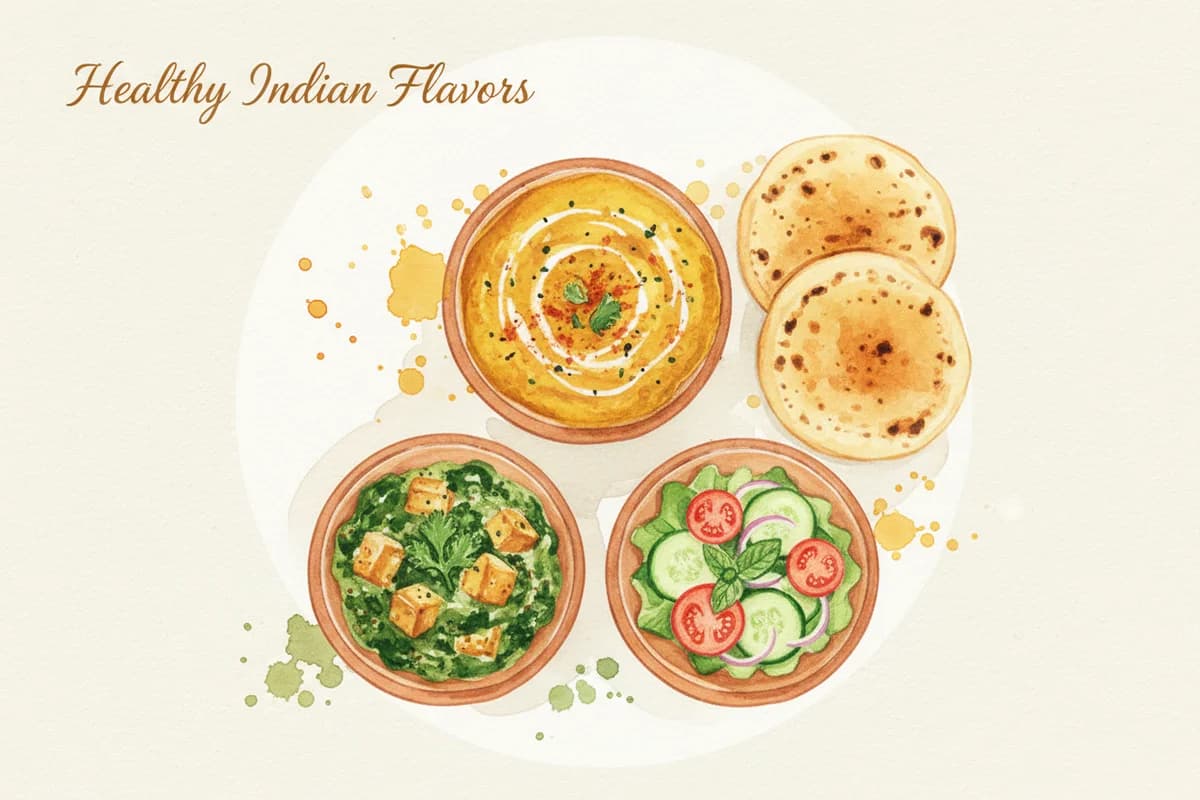
This guide shows you exactly how to lose weight eating dal-chawal, roti-sabzi, and the foods you already love, without counting every macro, without eliminating entire food groups, and without eating food that does not feel like home.
Weight management is influenced by many factors including genetics, hormones, medications, sleep, stress, and underlying health conditions. This guide provides general dietary strategies. Consult your doctor before starting any weight loss plan, especially if you have medical conditions.Why Diets Fail (and Why Indian Food Succeeds)
The JAMA Study That Changed Everything
A landmark 2018 study published in JAMA randomized over 600 overweight adults to either a low-fat or low-carb diet for 12 months [1]. The result: there was no significant difference in weight loss between the two approaches. Neither diet was superior. What mattered was adherence, how consistently people followed whatever plan they were on.
The Keto Problem for Indians
Keto requires consuming less than 20 to 50 grams of carbohydrates per day. A single roti contains about 20 grams. A serving of rice has 35 to 45 grams. One cup of dal has 20 grams.
To do keto properly, you must eliminate virtually every staple of Indian cuisine: roti, rice, dal, most fruits, and many vegetables. You are left eating paneer, eggs, and meat with fat, a diet that is neither sustainable nor culturally satisfying for most Indians.
Studies on keto and other restrictive diets consistently show high dropout rates. The JAMA study comparing multiple diets found that adherence dropped significantly after 3 to 6 months for all restrictive approaches [4].
The Indian approach is different: reduce portions and optimize composition, do not eliminate food groups.
The Dal-Chawal Advantage
Protein and Satiety
Dal is one of the most satiating foods per calorie. A cup of cooked dal provides 18 grams of protein and 16 grams of fiber for only 230 calories. A meta-analysis of randomized controlled trials found that pulse consumption was associated with greater satiety and reduced subsequent food intake compared to control diets [2].
Higher-protein diets consistently produce more weight loss than standard-protein diets in controlled trials, primarily because protein increases satiety and preserves muscle mass during caloric restriction [3]. Dal is the cheapest, most accessible, and most culturally embedded high-protein food available to Indians.
The Fiber Effect
The average Indian who eats dal daily already consumes more fiber than most Westerners. Fiber slows digestion, stabilizes blood sugar (preventing the crashes that trigger hunger), and feeds beneficial gut bacteria that may influence weight regulation.
One serving of dal + 2 rotis provides approximately 22 grams of fiber. The daily recommended intake is 25 to 30 grams. Most Western diets provide only 10 to 15 grams.
The Glycemic Argument
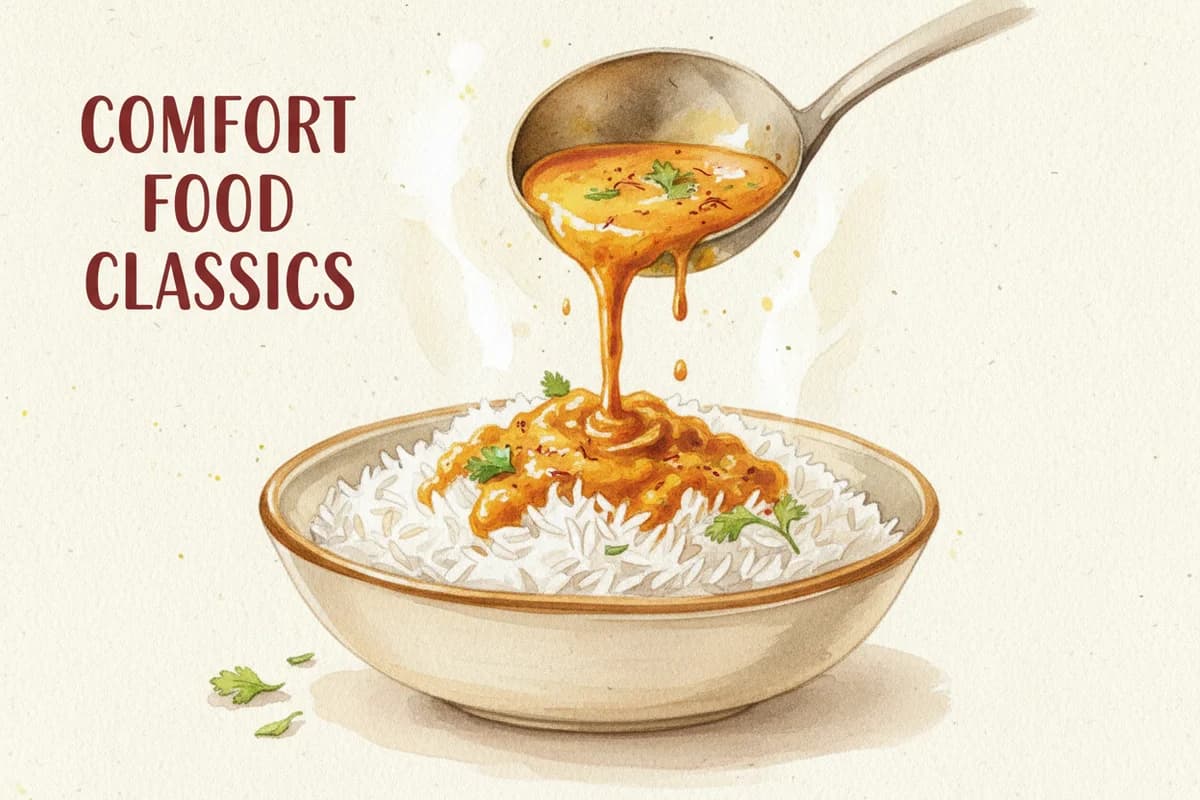
As we discuss in our article on rice and weight gain, adding dal to rice dramatically reduces the glycemic response, comparable to eating brown rice alone. The traditional Indian combination is already glycemically optimized.
The Indian Weight Loss Plate
Forget calorie counting. Focus on plate composition:
The 50-25-25 Rule
- 50 percent of your plate: vegetables. Sabzi, salad, raita. This provides volume, fiber, and micronutrients with minimal calories.
- 25 percent of your plate: protein. Dal, paneer, egg, chicken, fish, sprouts, or dahi. This provides satiety and protects muscle.
- 25 percent of your plate: complex carbohydrate. 1 roti (whole wheat or millet) or half a cup of rice. This provides energy without excess.
Caloric Guidelines
Most Indian adults targeting weight loss need approximately:
- Women: 1,200 to 1,500 calories per day
- Men: 1,500 to 1,800 calories per day
Use our nutrition calculator to check the exact calories for any Indian dish and our meal analyzer to build balanced thalis within your calorie target.
Foods to Eat Freely
All non-starchy vegetables. Palak, gobhi, bhindi, lauki, tori, beans, karela, baingan, methi, salad vegetables. Eat as much as you want. No one has ever gained weight from eating too much lauki. Dal and legumes. Every variety. The fiber and protein keep you full. One to two bowls per day. Dahi and buttermilk. Plain, unsweetened. Protein-rich, probiotic, and satisfying. Salads and raita. Volume without calories. Start every meal with salad.Foods to Eat in Measured Portions
Roti. Limit to 2 per meal (standard size). Prefer millet rotis (bajra, jowar, ragi) which are higher in fiber. Do not eat rotis dripping with ghee. A light brush is sufficient. Rice. Half a cup of cooked rice per meal. Choose basmati (lower GI) or brown rice. Always pair with dal, which is what you already do. Paneer. Limit to 75 to 100 grams per serving. Paneer is nutritious but calorie-dense (approximately 265 calories per 100 grams). Nuts. A small handful (20 to 30 grams) per day. Calorie-dense but highly satiating. Pre-portion rather than eating from the bag. Fruit. 1 to 2 servings per day. Whole fruit, not juice. Choose guava, apple, orange, or papaya. Ghee and oil. 1 to 2 teaspoons per meal for cooking. Measure rather than pour freely. See our article on how much fat is really in Indian food.Foods to Limit Significantly
Sugar. The single biggest change you can make. Reduce sugar in chai (or eliminate it), stop sweetened beverages, and reserve mithai for rare occasions. Sugar provides calories with zero satiety. Fried foods. Pakoras, samosas, puris, and bhature are calorie bombs. One puri is about 100 calories. Four puris with chole is 400 calories just from the bread. Switch to roti or eat chole with a small amount of rice. Maida products. Naan, kulcha, white bread, biscuits, and bakery items. Replace with whole wheat or millet alternatives. Packaged snacks. Chips, namkeen, and processed foods. Replace with roasted chana, makhana, nuts, or fruit. Sweetened drinks. Lassi with sugar, fruit juice, soda, sweetened chaas. Switch to plain chaas, black coffee, or unsweetened tea.7-Day Indian Weight Loss Meal Plan (1,400 to 1,600 Calories)
Day 1
- Breakfast (300 cal): Moong dal chilla (2) + mint chutney + small bowl dahi
- Mid-morning (100 cal): 1 guava + 5 almonds
- Lunch (400 cal): 1 bajra roti + 1 bowl dal tadka + lauki sabzi + salad with lemon
- Snack (80 cal): 1 cup chaas with cumin + 1 tbsp roasted chana
- Dinner (350 cal): Grilled paneer tikka (75g) + large mixed vegetable sabzi + half cup brown rice
- Total: ~1,230 calories, 58g protein, 30g fiber
Day 2
- Breakfast (280 cal): 2 egg bhurji with vegetables + 1 roti
- Mid-morning (90 cal): 1 apple + 3 walnuts
- Lunch (420 cal): 1 jowar roti + rajma + cucumber raita + large green salad
- Snack (60 cal): Roasted makhana (1 cup)
- Dinner (380 cal): Fish curry (150g, minimal oil) + 1 roti + palak sabzi
- Total: ~1,230 calories, 72g protein, 28g fiber
Day 3
- Breakfast (250 cal): Idli (3) + sambar + chutney
- Mid-morning (100 cal): Mixed seeds (1 tbsp) + 1 orange
- Lunch (400 cal): Half cup brown rice + masoor dal + bhindi sabzi + dahi + salad
- Snack (100 cal): Sprouted moong chaat with lemon and cumin
- Dinner (350 cal): Chicken breast tikka (120g) + large mixed raita + 1 small roti
- Total: ~1,200 calories, 68g protein, 26g fiber
Day 4
- Breakfast (300 cal): Besan cheela (2) with dahi + green chutney
- Mid-morning (80 cal): 1 small banana + 5 almonds
- Lunch (400 cal): 1 ragi roti + chole (home-cooked) + onion-tomato salad + raita
- Snack (50 cal): 1 cup chaas + cucumber sticks
- Dinner (380 cal): Dal makhani (moderate portion) + half cup rice + green salad
- Total: ~1,210 calories, 56g protein, 32g fiber
Day 5
- Breakfast (270 cal): Vegetable poha with peanuts + small bowl dahi
- Mid-morning (90 cal): 1 guava + pumpkin seeds (1 tbsp)
- Lunch (420 cal): 1 bajra roti + toor dal + baingan sabzi + raita + salad
- Snack (80 cal): Roasted chana (2 tbsp) + green tea
- Dinner (350 cal): Paneer bhurji (75g paneer) with vegetables + 1 roti
- Total: ~1,210 calories, 60g protein, 28g fiber
Day 6
- Breakfast (300 cal): Methi paratha (1, whole wheat) + dahi + pickle
- Mid-morning (100 cal): 1 apple + 5 almonds
- Lunch (380 cal): Sambar + half cup brown rice + poriyal (dry vegetable) + small bowl dahi
- Snack (60 cal): Buttermilk + roasted makhana
- Dinner (370 cal): Egg curry (2 eggs) + large vegetable salad + 1 roti
- Total: ~1,210 calories, 62g protein, 26g fiber
Day 7
- Breakfast (250 cal): Dosa (1) + sambar + coconut chutney
- Mid-morning (80 cal): Mixed nuts (small handful)
- Lunch (420 cal): 1 roti + chana dal + gobhi aloo (less potato, more gobhi) + raita + salad
- Snack (70 cal): Chaas + 1 small guava
- Dinner (350 cal): Khichdi (moong + rice, turmeric) + kadhi + papad
- Total: ~1,170 calories, 52g protein, 30g fiber
The 10 Highest-Impact Changes (Ranked)
If you make no other changes, do these in order of impact:
- Eliminate sugar from chai and beverages. Saves 100 to 200 calories per day. This alone can produce 0.5 kg weight loss per month.
- Eat dal at every lunch and dinner. Increases protein and fiber, reduces hunger between meals.
- Fill half your plate with vegetables. Non-starchy sabzi and salad. This displaces calorie-dense foods naturally.
- Limit roti to 2 per meal and rice to half a cup. Portion control on carbs is more effective than elimination.
- Replace fried snacks with roasted alternatives. Roasted chana, makhana, and nuts instead of chips and namkeen.
- Eat fruit instead of drinking juice. One glass of orange juice has the same sugar as 3 oranges but none of the fiber or satiety.
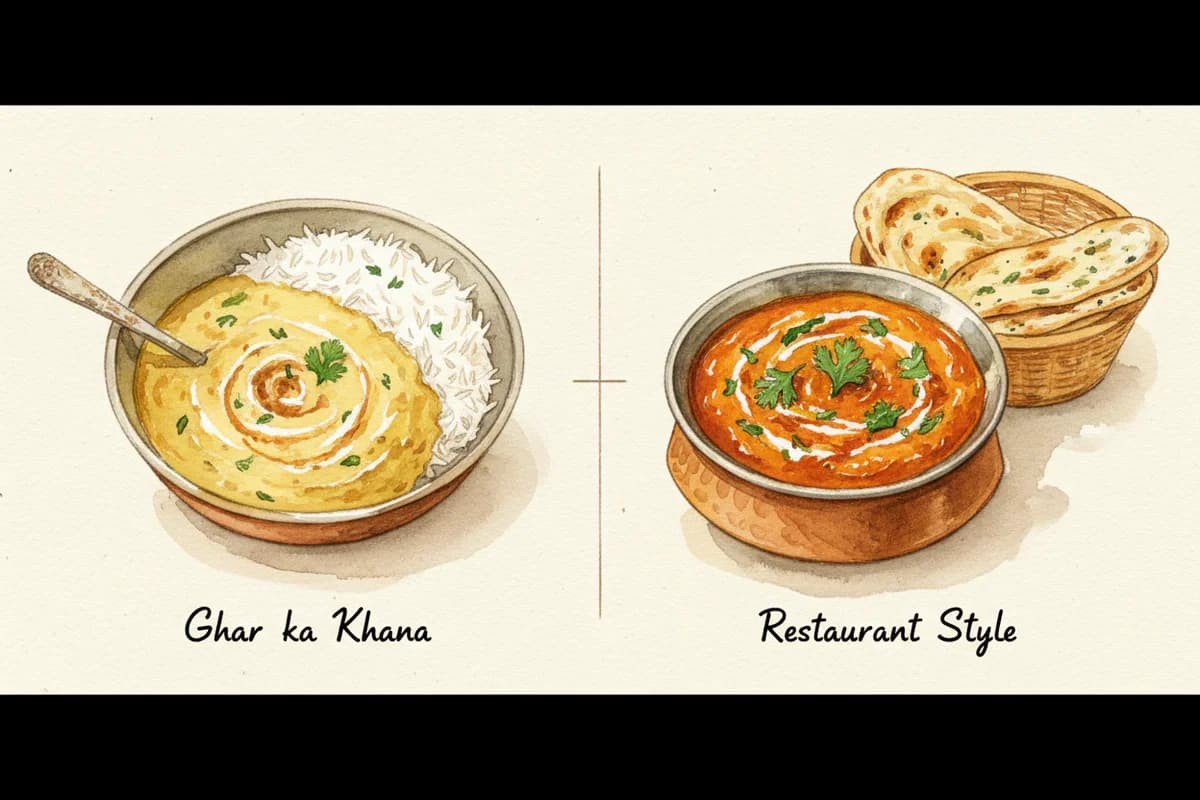
- Cook at home. Restaurant and takeout food contains 2 to 3 times more oil than home cooking. See our analysis of oil in Indian cooking.
- Add dahi or raita to every meal. Protein-rich, probiotic, and adds satiety.
- Walk for 30 minutes after dinner. Not a dietary change, but it amplifies everything above.
- Measure your cooking oil. Use a tablespoon instead of pouring from the bottle.
Why This Approach Works Long-Term
The JAMA diet comparison study found that the single best predictor of long-term weight loss was adherence [4]. People who stuck to their diet lost weight. People who did not, regardless of which diet they followed, regained it.
An Indian weight loss diet based on dal-chawal, roti-sabzi, and traditional cooking works because:
- It is culturally familiar. You do not need to learn new recipes or buy unfamiliar ingredients.
- It is socially compatible. You can eat with your family, at gatherings, and at restaurants with minor modifications.
- It is nutritionally complete. You get adequate protein, fiber, micronutrients, and energy without supplements.
- It is affordable. Dal and roti are among the cheapest nutritious meals in the world.
- It is satisfying. You are eating real food with real flavors, not bland "diet food."
The Bottom Line
You do not need to go keto, paleo, or Mediterranean to lose weight. You need to eat the Indian food you already love, in the right proportions, with a few strategic adjustments.
More dal. More vegetables. Less sugar. Less fried food. Measured portions of roti and rice. That is it. That is the entire weight loss strategy.
It is not exciting or revolutionary. It will not sell supplements or require an app subscription. But it works, the research supports it, and you can do it for the rest of your life without feeling like you are on a diet.
Start with the 10 changes listed above. Make them one at a time. And trust that the food your family has eaten for generations is not the enemy of your health goals. It is the foundation.
Sources and References
- [1] Gardner CD, Trepanowski JF, Del Gobbo LC, Hauser ME, Rigdon J, Ioannidis JPA, Desai M, King AC. “Effect of Low-Fat vs Low-Carbohydrate Diet on 12-Month Weight Loss in Overweight Adults and the Association With Genotype Pattern or Insulin Secretion.” JAMA, 2018. View source
- [2] Kim SJ, de Souza RJ, Choo VL, Ha V, Cozma AI, Chiavaroli L, Mirrahimi A, Blanco Mejia S, Di Buono M, Bernstein AM, Leiter LA, Kris-Etherton PM, Vuksan V, Beyene J, de Souza RJ, Sievenpiper JL. “Effects of dietary pulse consumption on body weight: a systematic review and meta-analysis of randomized controlled trials.” American Journal of Clinical Nutrition, 2016. View source
- [3] Wycherley TP, Moran LJ, Clifton PM, Noakes M, Brinkworth GD. “Effects of energy-restricted high-protein, low-fat compared with standard-protein, low-fat diets: a meta-analysis of randomized controlled trials.” American Journal of Clinical Nutrition, 2012. View source
- [4] Dansinger ML, Gleason JA, Griffith JL, Selker HP, Schaefer EJ. “Comparison of the Atkins, Ornish, Weight Watchers, and Zone diets for weight loss and heart disease risk reduction.” JAMA, 2005. View source
- [5] Mudryj AN, Yu N, Aukema HM. “Nutritional and health benefits of pulses.” Applied Physiology, Nutrition, and Metabolism, 2014. View source
Medical Disclaimer
This content is for educational purposes only. It is not medical advice, diagnosis, or treatment. Consult your doctor or registered dietitian before making dietary changes, especially if you have a medical condition or are taking medication.
If you have weight management, work with your healthcare provider to develop a diet plan that is right for you. The information below summarizes published research but is not a substitute for personalized medical guidance.
Related Recipes
More on Nutrition
Get Weekly Nutrition Insights
Evidence-based articles on Indian food and health, delivered to your inbox. No spam, no fads, just science.