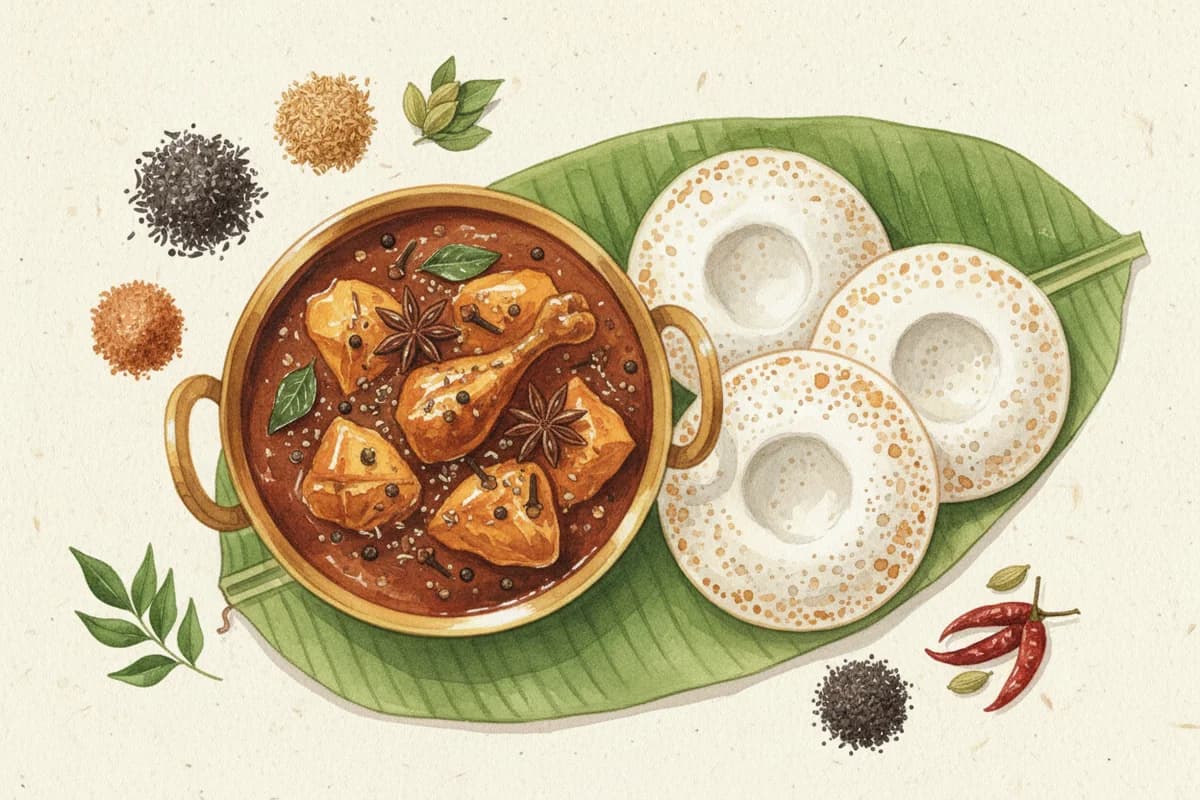
The Cuisine That Out-Spices the Rest of India
In a country where every region claims to make the spiciest food, Chettinad wins. Not through brute force of chili heat alone, but through an astonishing complexity of spice blending that uses 30 to 40 different spices, many of them rare or unique to this cuisine.
Chettinad refers to the region of Sivaganga and Pudukkottai districts in Tamil Nadu, homeland of the Nattukottai Chettiars (Nagarathars), a merchant community whose wealth from trade brought spices from across Southeast Asia into their kitchens. The result is a cuisine that is simultaneously rooted in Tamil Nadu and influenced by the spice routes of the Indian Ocean.
The Chettinad Spice Palette
What makes Chettinad unique is not just the number of spices but which ones appear:
Kalpasi (stone flower). A lichen harvested from rocks, kalpasi adds an earthy, smoky depth that is irreplaceable. It is used in many Chettinad masala blends and is nearly unknown outside Tamil Nadu. Marathi mokku (dried flower buds). These small, dark flower buds add a subtle floral complexity. They are essential to the Chettinad masala and unavailable in most other Indian cuisines. Star anise. While used in some North Indian biryanis, star anise is a core Chettinad spice, reflecting the Southeast Asian trade connections. Black pepper. Used in far greater quantities than anywhere else in India. Chettinad pepper chicken and pepper rasam are pepper-forward dishes where the spice is the star, not a supporting player. Fennel seeds. More prominent in Chettinad than in most Indian cooking, adding a sweet anise note. The standard Indian spices are also present: cumin, coriander, turmeric, fenugreek, mustard seeds, curry leaves, dried red chilies, cinnamon, cloves, and cardamom. But the ratios and combinations are unique.The Chettinad Masala
The house masala of Chettinad cooking is a freshly ground blend typically containing: dried red chilies (several varieties for both heat and color), black pepper, cumin, fennel, coriander, cinnamon, cloves, star anise, kalpasi, marathi mokku, and sometimes poppy seeds and dried coconut.
Each family has their own ratio. The masala is always freshly ground, never store-bought. The act of roasting and grinding the spices is considered an essential part of the cooking process.
The Signature Dishes
Chettinad Chicken (Chettinad Kozhi Kuzhambu)
The flagship dish. Chicken cooked in a fiery, complex gravy made with freshly ground Chettinad masala, onions, tomatoes, curry leaves, and coconut. The heat comes primarily from black pepper and dried red chilies, creating a layered warmth that builds rather than attacks.
Good Chettinad chicken should make you sweat gently while craving another bite. The complexity of the spice blend means you taste something new with each mouthful.
Pepper Chicken (Milagu Kozhi)
A drier preparation where black pepper is the dominant spice. Chicken pieces are cooked with cracked black peppercorns, curry leaves, and minimal gravy until the spice coating clings to each piece. It is a masterclass in what black pepper can do when used boldly.
Chettinad Egg Curry
Hard-boiled eggs in a Chettinad masala gravy. Simple, affordable, and shockingly flavorful. The egg absorbs the complex spice blend, and the yolk enriches the gravy slightly.
Kuzhi Paniyaram
Fermented rice and lentil batter (the same base as idli and dosa) cooked in a special pan with round indentations, producing small, savory dumplings that are crispy outside and fluffy inside. Served with coconut chutney and spiced onion.
Kaara Kuzhambu
A tangy, spicy tamarind-based curry that showcases the Chettinad approach to balancing heat, sour, and savory. Often made with vegetables, drumstick, or small onions.
Athirasa and Kavuni Arisi
Chettinad sweets. Athirasa is a deep-fried rice and jaggery pastry. Kavuni arisi is sweetened black rice cooked with coconut milk, a dish of stunning visual beauty, jet-black rice in white coconut milk.
The Cooking Techniques
Freshly Ground Masala for Every Dish
The most distinctive aspect of Chettinad cooking is that spice blends are ground fresh for each major dish. No single jar of masala serves all purposes. The cook selects and roasts specific spices based on the protein, the desired heat level, and the occasion.
This means a Chettinad kitchen smells constantly of roasting spices. The sound of the stone mortar and pestle (ural and ulakkai) or, in modern kitchens, the mixer-grinder is the background music of meal preparation.
The Kuzhambu Technique
Many Chettinad curries follow this structure:
- Heat oil (sesame oil is traditional, not coconut oil as in Kerala)
- Temper mustard seeds, urad dal, curry leaves, and dried red chilies
- Cook onions until deeply browned
- Add ginger-garlic paste
- Add freshly ground Chettinad masala, cook until fragrant
- Add tomatoes and/or tamarind extract
- Add the protein (chicken, fish, egg, or vegetables)
- Simmer until cooked through
- Finish with more curry leaves and sometimes a touch of coconut
Sesame Oil as Base
Where Kerala uses coconut oil and North India uses ghee or mustard oil, Chettinad cooking uses gingelly oil (sesame oil) as its primary cooking fat. The slightly nutty, earthy flavor of sesame oil complements the bold spice blends. It also has a high smoke point suitable for the tempering and browning that Chettinad cooking demands.
The Cultural Context
The Chettiar Trading Community
The Nagarathars were among India's most successful merchant communities, trading across Southeast Asia, from Sri Lanka to Myanmar to Singapore and Malaysia. They built the palatial mansions of Karaikudi and Devakottai, adorned with Burmese teak, Italian marble, and Belgian glass.
Their cuisine reflects this global reach. The use of star anise, kalpasi, and certain spice blending techniques show influences from the Malay Peninsula and Myanmar, melded with Tamil traditions. Chettinad food is what happens when a wealthy, well-traveled community has access to the world's finest spices and centuries to refine how to use them.
The Mansions and the Kitchen
Chettinad mansions (ancestral homes) contain massive kitchens designed for large-scale cooking. Weddings and festivals involve preparing food for hundreds of guests, and the cooking is done by teams of women who have inherited recipes through generations.
The architecture of the kitchen, with its stone grinding platforms, dedicated spice storage, large wood-fired stoves, and ventilation systems designed to handle the smoke of roasting spices, tells you everything about the importance of food in Chettinad culture.
Chettinad vs. Other South Indian Cuisines
| Feature | Chettinad | Kerala | Karnataka |
|---|---|---|---|
| Primary oil | Sesame | Coconut | Coconut / groundnut |
| Spice intensity | Very high | Moderate | Moderate |
| Signature spice | Black pepper + kalpasi | Coconut + curry leaves | Byadgi chili |
| Protein emphasis | Chicken, fish, egg | Fish, seafood | Varied |
| Heat source | Pepper + red chili | Moderate chili | Byadgi (color, mild heat) |
| Coconut use | Some, in gravies | Abundant | Moderate |
Why Chettinad Deserves More Recognition
Chettinad cuisine is widely known within Tamil Nadu and among South Indian food enthusiasts, but it lacks the global recognition of Punjabi or even Kerala food. This is partly because the unique spices (kalpasi, marathi mokku) are difficult to source outside the region, and partly because the cuisine has not been simplified for mass appeal.
That is also what makes it special. Chettinad food is uncompromising. It does not dial down the spice level for outside audiences. It does not substitute easier-to-find ingredients. It demands that you meet it on its own terms.
If you love spice and complexity, Chettinad cooking is the deepest rabbit hole in Indian cuisine. Start with Chettinad chicken, and you will understand why.
The Bottom Line
Chettinad cuisine represents the peak of Indian spice complexity. The combination of rare ingredients, freshly ground masalas, bold flavors, and a trading community's global palate has produced a food tradition that is intense, sophisticated, and completely unique.
It is not beginner-friendly. It is not mild. It is not designed for timid palates. But for anyone willing to source the ingredients and invest the time, Chettinad cooking delivers flavors that no other Indian cuisine, and arguably no other cuisine in the world, can match.
Explore our South Indian recipes to start your journey into the food of Tamil Nadu.


